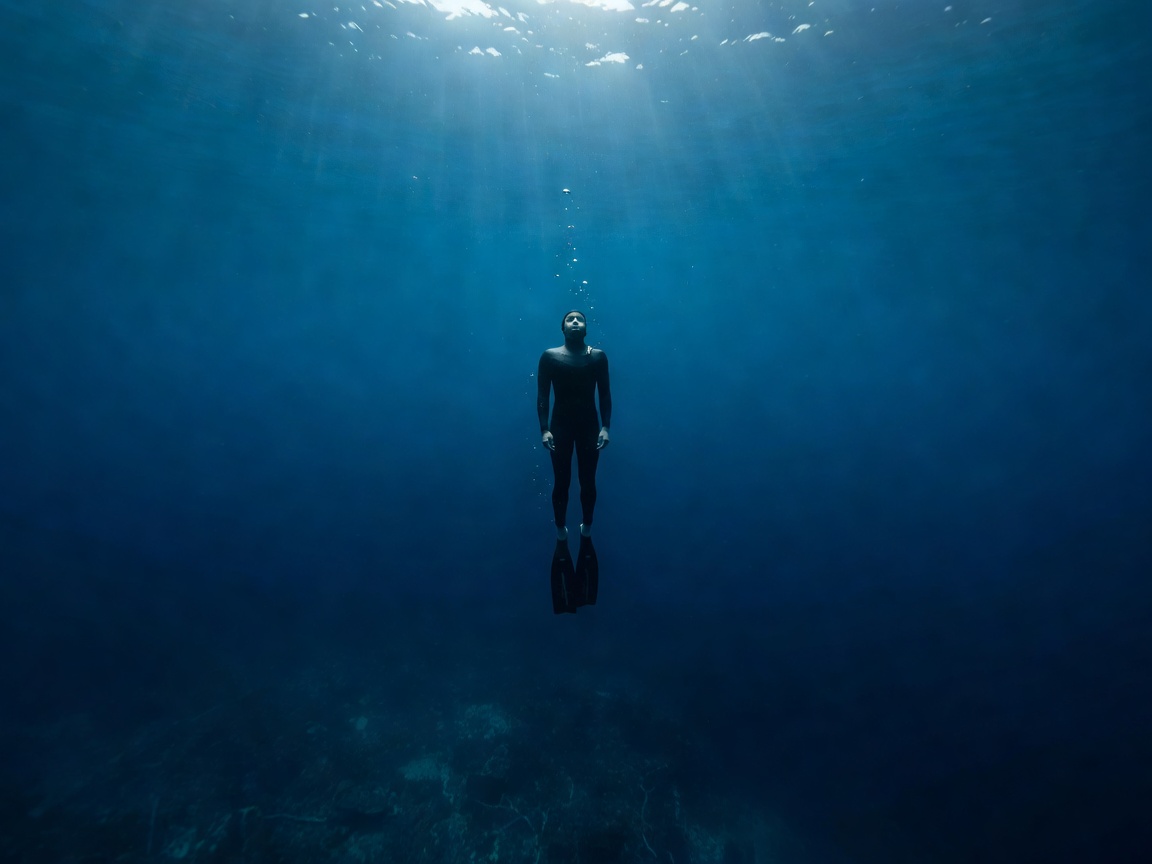
Spearfishing is inextricably linked to the discipline of freediving. Before you can hunt effectively, you must be able to move through the water column silently, comfortably, and safely on a single breath. Brute force will empty your oxygen reserves in seconds. The most successful hunters rely on physiology, biomechanics, and mental conditioning to extend their bottom time.
The Mammalian Dive Reflex
Human bodies possess a hardwired evolutionary response to submersion in water, known as the Mammalian Dive Reflex (MDR). This reflex initiates a series of physiological changes designed to preserve oxygen for vital organs (the brain and heart). Understanding and intentionally triggering this reflex is the foundation of extended breath holds.
- Bradycardia: The immediate slowing of the heart rate upon facial contact with cold water.
- Peripheral Vasoconstriction: The narrowing of blood vessels in the extremities, routing oxygen-rich blood away from the limbs and toward the core.
- Blood Shift: At significant depths, blood plasma fills the space in the lungs to prevent them from collapsing under immense hydrostatic pressure.
To maximize the MDR, divers spend ample time on the surface performing "breathe-ups"—slow, diaphragmatic breathing that relaxes the body, lowers the resting heart rate, and saturates the tissues with oxygen without hyperventilating.
Equalization: Frenzel vs. Valsalva
As you descend, the pressure forces the eardrums inward. Failure to equalize this pressure will result in a ruptured tympanic membrane. The method you use dictates your efficiency and depth limit.
The Valsalva Maneuver involves pinching the nose and blowing out forcibly from the lungs. It is common among beginners and scuba divers, but highly inefficient for freedivers. It requires engaging the chest muscles, which burns oxygen, and becomes physically impossible at greater depths where lung volume is heavily compressed.
The Frenzel Maneuver is the standard for serious freedivers. It involves pinching the nose, closing the vocal cords (glottis), and using the back of the tongue as a piston to push a small pocket of air up into the Eustachian tubes. Because it relies only on the small muscles of the tongue and throat, it consumes almost zero oxygen and works efficiently regardless of lung compression at depth.
The Duck Dive
The transition from floating on the surface to descending into the water column is a critical moment. A sloppy entry creates splashing, scares away fish, and requires aggressive finning to overcome positive buoyancy, burning precious energy. A perfect duck dive converts your body's potential energy into downward momentum.
The technique requires bending at the waist 90 degrees, pointing your upper body straight down toward the bottom. You then raise your legs entirely out of the water. The weight of your legs pushing down through the air drives your body beneath the surface without a single fin kick. Only once your fins are completely submerged do you begin a slow, powerful kicking cycle.
Finning Mechanics
Inefficient kicking destroys bottom time. Many beginners attempt to kick from the knee, riding a "bicycle" motion that creates drag and wastes energy. Proper long-blade finning originates from the hip. The leg remains relatively straight, with a slight flex in the knee, allowing the long carbon or fiberglass blade to whip through the water.
Furthermore, finning should be steady and rhythmic, not frantic. During descent, divers rely on finning only until they become negatively buoyant (the point at which the compressed wetsuit offers less lift than the weight belt pulls down). Once negative buoyancy is achieved, the diver stops kicking entirely and enters a "freefall," sinking effortlessly to their target depth, achieving maximum relaxation and oxygen conservation prior to the hunt.